Choosing the right flooring involves more than selecting a colour. Room conditions, usage intensity, moisture exposure, plank format, installation requirements and everyday maintenance should all be considered together.
The answers below provide general guidance to help you understand the most important flooring topics. Product specifications may vary between individual collections, so technical details should always be confirmed before purchase.
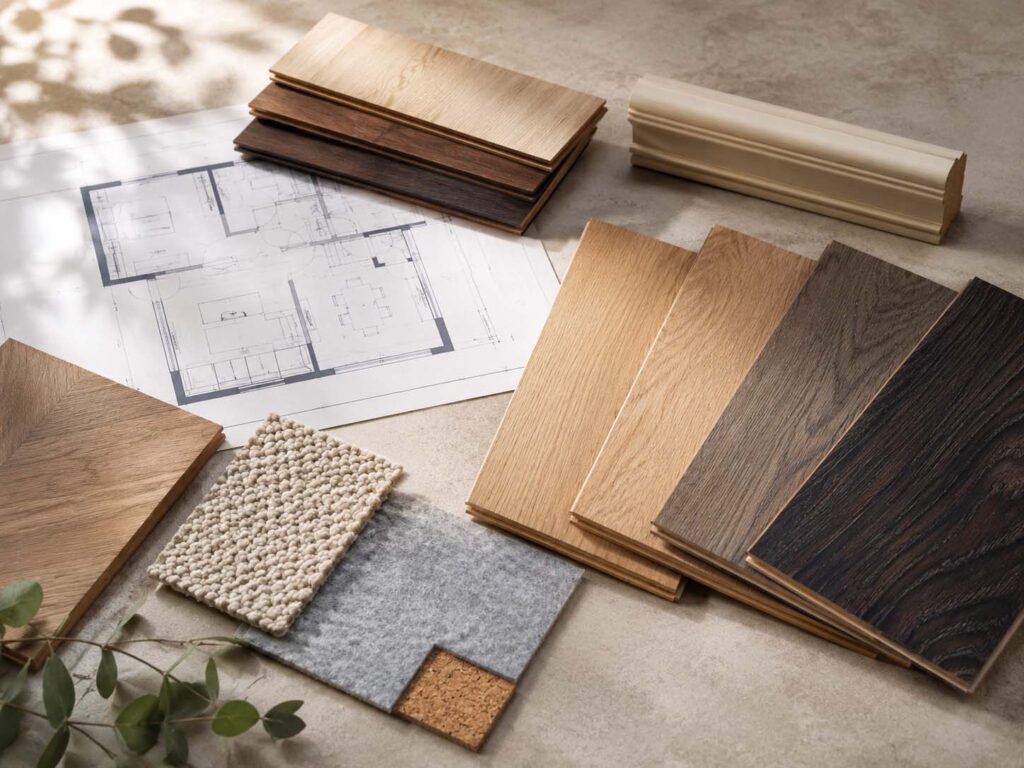
Understand the most important design and practical factors before selecting flooring for your interior.
Start by considering the room’s function, daily usage, moisture conditions, natural light and overall interior style. Colour and surface texture influence the atmosphere, while plank format can affect how spacious the room feels. Technical features such as durability and moisture resistance should also match the intended area. Comparing physical samples in the actual space is recommended whenever possible.
Light and neutral flooring colours generally help a room feel brighter, calmer and more spacious. Wider planks and designs with limited colour variation can also create a more continuous appearance. Dark flooring can add depth and character, but it may make small or poorly lit rooms feel more enclosed.
Flooring does not need to match doors and furniture exactly. A coordinated contrast often creates a more natural and balanced interior. Warm flooring usually works well with warm-toned furniture, while neutral shades provide greater flexibility. Comparing samples next to doors, cabinets and wall colours helps prevent unwanted colour combinations.
Both light and dark flooring can be easy to maintain, but they show different types of marks. Dark surfaces may reveal dust, light scratches and footprints more clearly. Very light floors may make darker dirt more noticeable. Mid-tone natural wood decors are often the most forgiving choice for active homes and everyday use.
Learn which flooring features should be considered for kitchens, entrances, family homes and commercial spaces.
Water-resistant flooring is generally a practical option for kitchens when the selected product is approved for the intended conditions. Spills should be cleaned promptly, and suitable underlay, expansion gaps and installation details are important. Product specifications should always be checked before using flooring in moisture-prone areas.
Laminate flooring can be suitable for entrance areas when the product has an appropriate durability level and additional moisture protection where required. Entrance mats help reduce dirt, sand and water carried in from outside. Regular cleaning also helps protect the surface from premature wear.
Consider flooring that is durable, easy to clean and suitable for active everyday use. Natural mid-tone decors are practical because they usually hide dust, pet hair and small marks better than extremely dark or very light surfaces. Furniture protection and prompt cleaning of spills are also important.
Commercial interiors require flooring selected according to expected foot traffic, maintenance requirements and the type of business. Offices, retail stores, restaurants and showrooms may have different technical needs. Product durability classifications and manufacturer recommendations should be checked before final selection.
Understand moisture-related terminology and the factors that influence long-term flooring performance.
Standard laminate flooring should not automatically be considered waterproof. Some products provide enhanced water resistance, but their protection level and approved usage areas vary. The product’s technical specifications should clearly confirm its moisture performance. Standing water should always be removed as quickly as possible.
Water-resistant flooring is designed to tolerate limited moisture exposure for a specified period or under defined conditions. Waterproof flooring is intended to provide a higher level of protection, but the exact meaning still depends on the manufacturer’s technical definition. Product documentation should always be reviewed.
Wipe up the water promptly using a soft, absorbent cloth. Avoid allowing moisture to remain around joints, edges or skirting boards. If a large amount of water has entered beneath the flooring, professional inspection may be required. The correct response depends on the product and the extent of exposure.
Wear or usage classifications indicate the level of traffic and surface stress a flooring product is designed to handle. Products intended for bedrooms may have different requirements from those used in offices or retail spaces. The classification should be reviewed together with the recommended application areas.
General information about subfloor preparation, underlay, expansion gaps and installation conditions.
Not always. Some flooring systems may be installed over an existing surface if it is dry, stable, clean and sufficiently level. Damaged, uneven or moisture-affected flooring may need to be removed or repaired. Site conditions should be assessed before installation begins.
Laminate flooring may be installed over tiles when the tiled surface is stable, level, dry and suitable for the selected system. Significant joints, height differences or damaged tiles may require preparation. Door clearances and the final floor height should also be checked.
Underlay can improve walking comfort, reduce sound, support minor surface irregularities and provide additional moisture protection where required. The correct type depends on the subfloor, flooring product, room conditions and whether underfloor heating is present.
Yes. Floating flooring systems generally require expansion gaps around walls, columns, door frames and other fixed elements. These gaps allow the flooring to respond naturally to changes in temperature and humidity. Required dimensions may vary according to the product and room size.
Simple care practices that help flooring maintain its appearance and performance for longer.
Remove dust and loose dirt with a soft broom or vacuum cleaner, then use a well-wrung damp mop when necessary. Avoid excessive water and clean spills promptly. Use cleaning products specifically suitable for laminate flooring and follow the manufacturer’s care instructions.
Steam cleaners are generally not recommended unless the flooring manufacturer specifically approves their use. Heat and moisture may enter the joints and damage the flooring structure. A lightly damp mop is usually a safer cleaning method.
Place felt pads beneath chair legs, tables and movable furniture. Lift furniture instead of dragging it, and use protective mats beneath chairs with wheels. Check protective pads regularly because trapped dirt can also scratch the surface.
The solution depends on the type and location of the damage. Minor surface marks may be reduced with an approved repair product, while deeper damage may require plank replacement. Replacement is easier when spare planks from the original collection are available.
Information about current models, product identification, physical samples and project support.
Product availability may change depending on the collection, model and current supply conditions. Some designs may be available immediately, while others may require confirmation or special ordering. Contact our team with the product name or code to check current availability.
Send the product name, collection or reference code to the YAPRAK PARKE team by phone, email or social media. A photograph or screenshot can also help identify the requested model. Our team will confirm the latest availability and suitable alternatives.
Yes. Visitors can compare colours, textures, patterns and plank formats at the YAPRAK PARKE showroom in Tbilisi. Viewing physical samples is recommended because colours and surface details may look different on screens or in photographs.
YAPRAK PARKE provides product selection and supply support for residential, commercial and development projects. Requirements such as project area, usage intensity, design preferences and technical conditions can be reviewed to identify suitable flooring options.
NEED MORE INFORMATION?
Contact the YAPRAK PARKE team or visit our Tbilisi showroom to compare flooring samples and receive practical guidance for your home, business or development project.

YAPRAK PARKE brings natural character, lasting quality and carefully selected flooring solutions to homes and professional interiors across Georgia.
© 2026 YAPRAK PARKE.
All rights reserved.
Tbilisi Showroom
15 Kedia Street, Tbilisi,Georgia
+995 514 16 16 16
info@yaprakparke.ge